 Skip to content


What’s the Best Glass Cleaner for Cars? A Formulator’s Guide
Best Glass Cleaner for Cars: 4 Things a Formulator Looks For
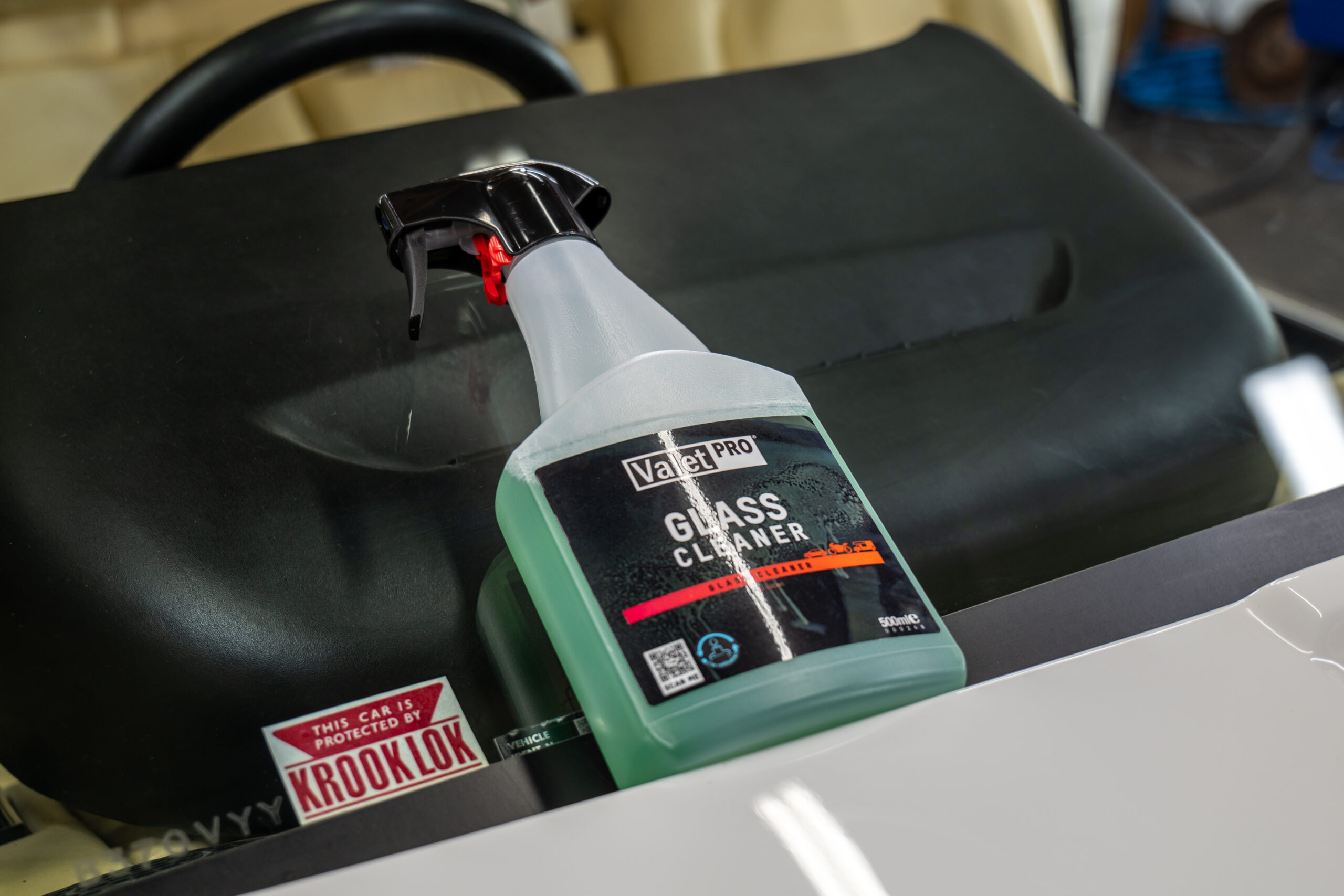
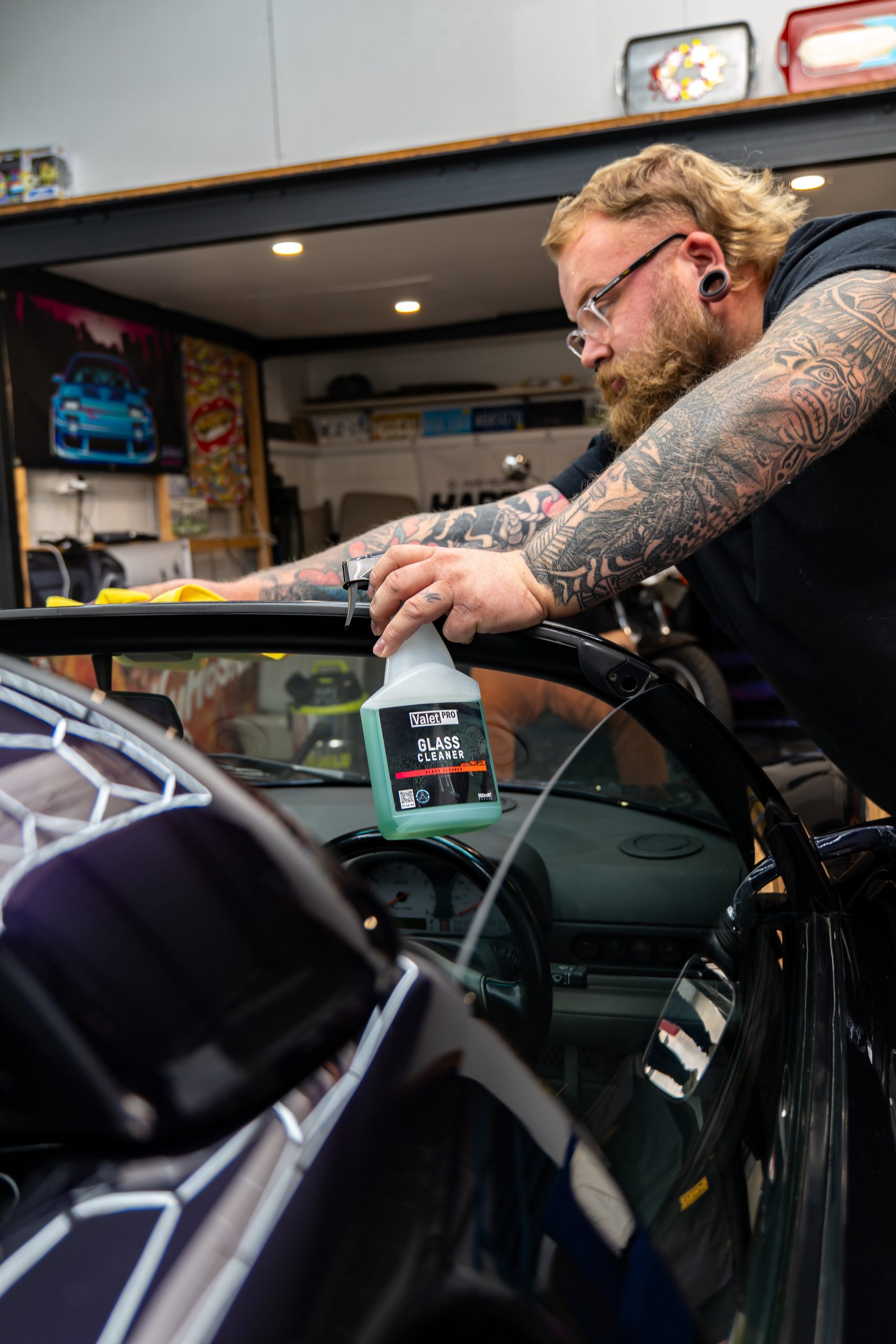
The best glass cleaner for cars evaporates completely clear, cuts through grease and interior film, leaves no smell or residue, and won’t harm tint, rubber or plastics. The cloth you use matters just as much. Here’s what we learned formulating ValetPRO Glass Cleaner, including who it isn’t right for.
What makes the best glass cleaner?
Its one job is to degrease and clean the surface, then leave nothing behind. When we formulate one we test every ingredient to make sure it either wipes off cleanly or evaporates to a clear finish.
A good one should:
- Evaporate clear, with no residue
- Leave no smell behind
- Cut through grease and film
- Be safe on tint, rubber and plastics
Why household cleaners aren’t ideal on a car
Low-cost cleaners often contain ammonia. It’s an aggressive alkaline cleaner. On a car it can damage window tint, fade and dry out plastics and rubber, and discolour surfaces, especially if it’s left to sit or oversprays onto trim.
Ammonia smells strong, so these cleaners often add fragrance oils to mask it. Oils are greasy and leave smears behind. Fragrance has no place in a glass formula.
Car glass shows up smears far more than glass at home. You may have noticed it yourself: the glass looks clean until you change position, and then the smear appears again. If you’re having this problem, the cause is usually one of three things: the product, the cloth, or the method.
Formulation: Alcohol vs ammonia vs solvent-based glass cleaners
Many formulas use alcohol (ethanol or IPA) to speed up drying. Alcohols are very volatile solvents: in neat form they have a flash point of around 12–14°C.
That matters. In our own flash-point testing, formulas containing more than about 3% IPA flashed below 60°C, the point at which a product is classed as flammable. Published guidance suggests up to 5% is acceptable, but when we ran the test ourselves, the product flashed below 60°C.
High alcohol content also raises safety concerns in use. We’ve heard stories of high-alcohol sprays catching fire from static sparks.
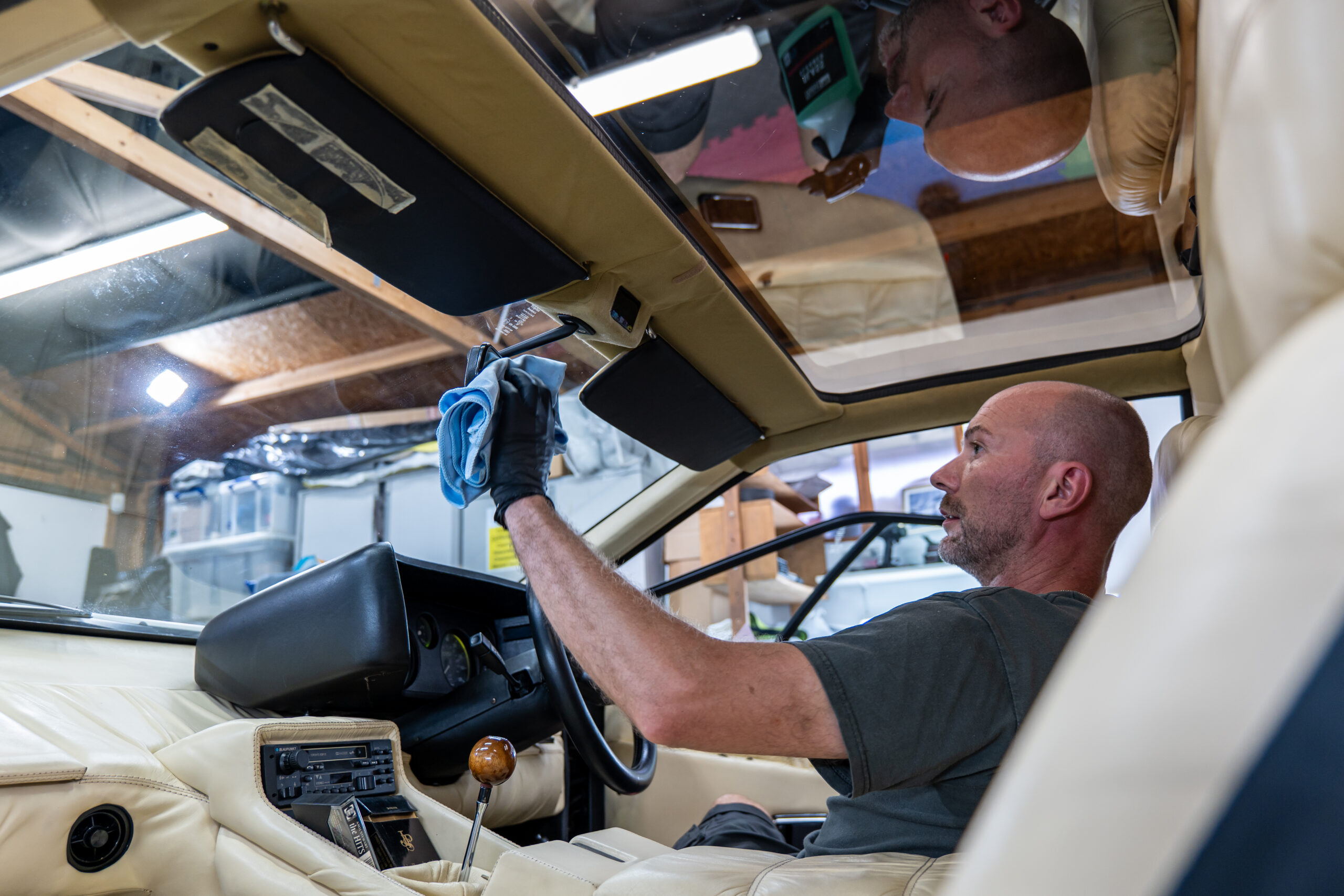
In our opinion, these cleaners also flash off too quickly, which makes it harder to leave the surface clean. We prefer a longer working time, so that’s how we designed ours. It contains no ethanol or IPA. Instead, it uses a slower-evaporating solvent that gives you time to spread and buff before it dries.
| Type | Drying speed | Good at | Drawbacks |
| Alcohol-based (ethanol / IPA) | Very fast | Quick wipe-downs | Can become flammable above about 3%; flashes off before you can buff; streaks in sun |
| Ammonia-based | Fast | Low cost, cuts grease | Can damage tint and fade plastics and rubber; strong smell, often masked with fragrance oils |
| Slow-evaporating solvent (ValetPRO) | Controlled | Time to buff to a clear finish; no smell | Takes a little longer to dry; some trade users prefer faster |
Does fragrance matter?
Yes. Fragrance oils may make a a product smell nice while you use it, but they often leave a greasy film on the glass that is only visible at certain angles. Our formula has no added fragrance: less residue, nothing to smear.
The cloth matters as much as the liquid
You can have a great formula, but if you use a dirty cloth, you’re not going to clean the glass. Any oil or grease in the cloth ends up on the glass. So first, a clean cloth is a must.
Next is the type of microfibre. Looped towels tend to pick up lint over time, or carry it from the manufacturing process, and leave it on the glass as you clean. ValetPRO’s Microfibre Glass Cloth has a denim weave that doesn’t have the same drawback, and makes glass cleaning super easy.
How we tested our formula
We spent a lot of time testing each individual ingredient for smears and residue. The difference each one made on glass amazed us.
We diluted each ingredient in deionised water and tested it on home windows and mirrors. Once we had narrowed down the best ingredients, we built the formulation, ran the same tests again, and then used it for its intended purpose: on cars, and around the home.
Our next step was trade feedback. Most trade customers loved it, and it has become their go-to. But we don’t all work the same way. Some trade businesses prefer a faster-evaporating glass cleaner. They told us the cleaning was perfect, but they wanted it to dry faster.
When we design products, we make the products we love, and the customers who are drawn to our products love what we do. If we made it evaporate faster, we would likely lose the customers who love it as it is.
We like to keep a grounded approach, and we don’t pretend to make what everyone wants. For some people, what we make is perfect. For others, that same perfection is a drawback.
Our recommendation
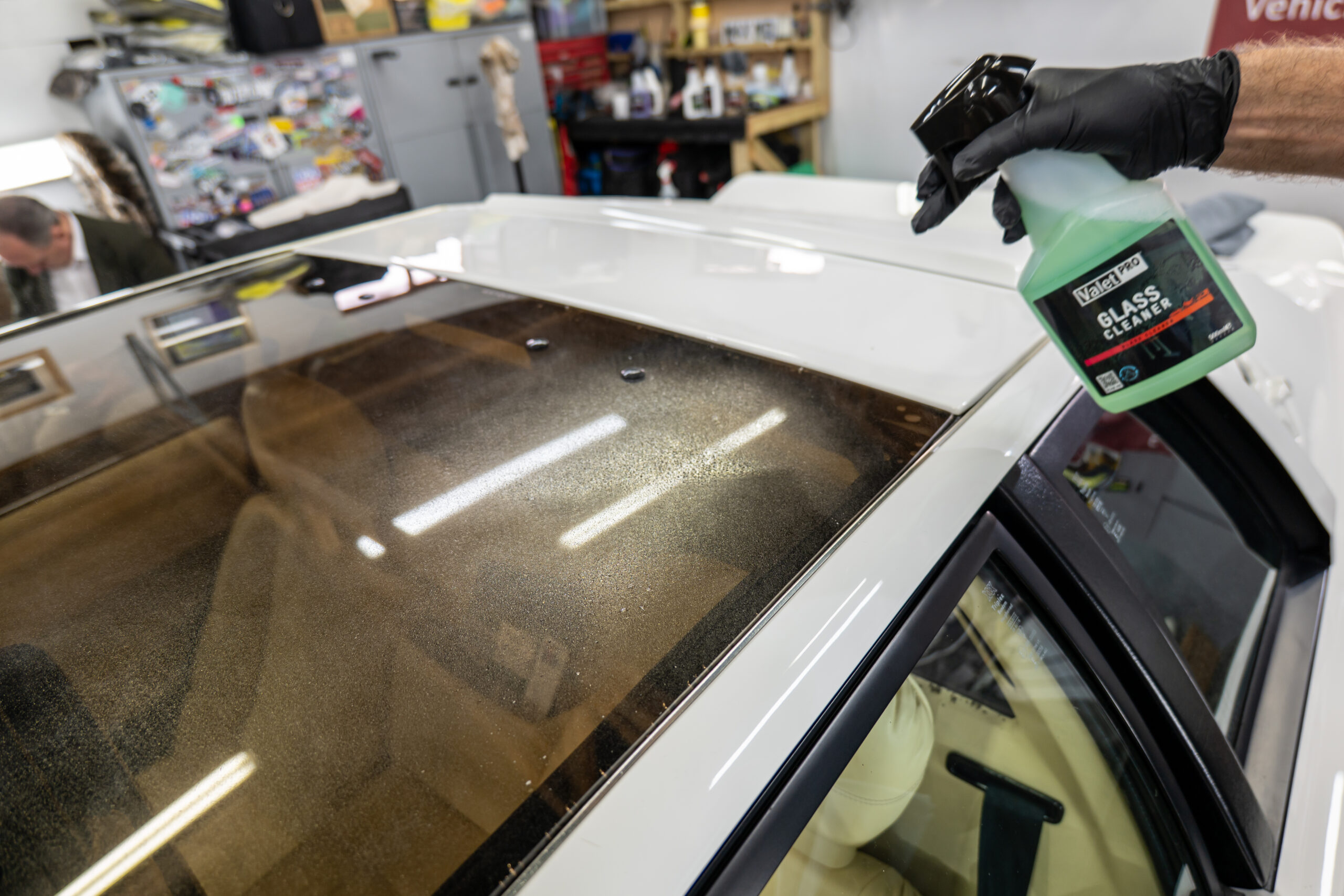
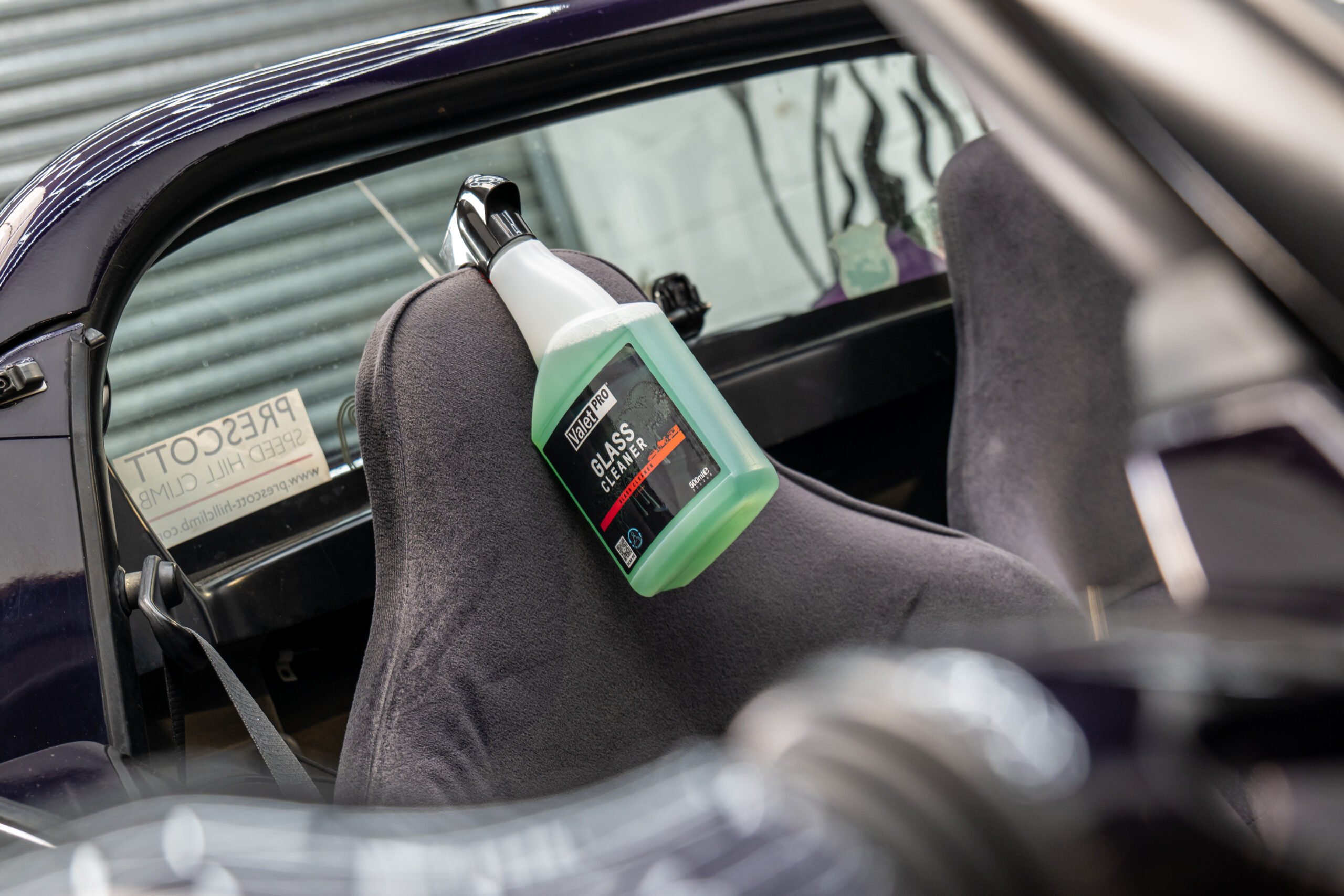
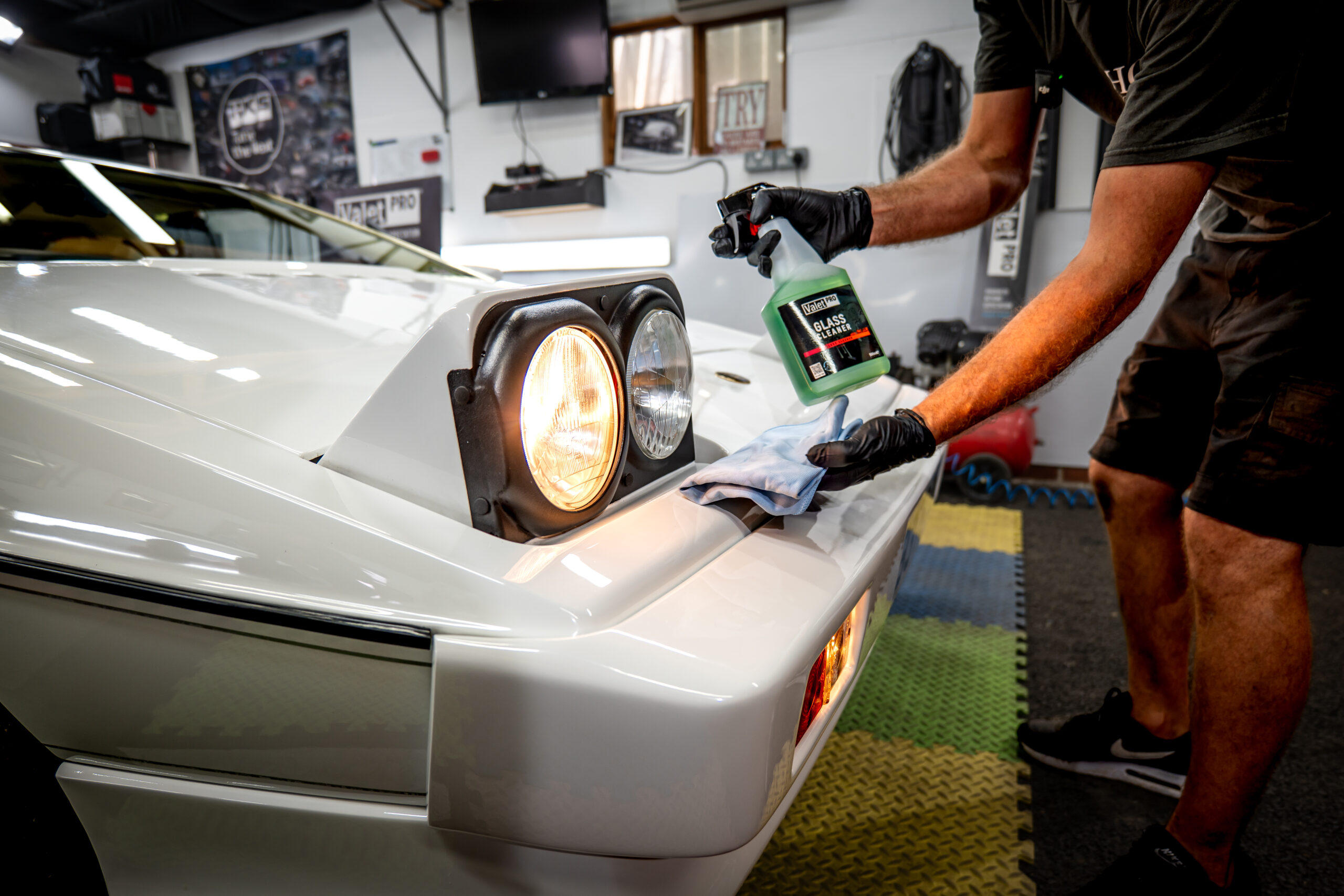
For a clear finish with time to work, we recommend ValetPRO Glass Cleaner (500ml trigger or 5L refill) with the Microfibre Glass Cloth 3-Pack. Spray onto one cloth, spread across the glass, then buff with a second clean, dry cloth.
When you need something else:
- Etched water spots (mineral marks that won’t wipe off) need a dedicated water-spot remover or glass polish.
- Bonded contamination that you can feel on the glass needs a clay bar treatment before cleaning.
- Scratches or wiper arcs need glass polishing, not cleaning.
- If you prefer a very fast-drying glass cleaner, ours may not suit you, and that’s fine.
Frequently asked questions
Why does my windscreen streak after cleaning?
Usually one of three things: the cleaner (fragrance oils or residue), the cloth (dirty, or washed with fabric softener), or the method (too much product, or cleaning in direct sun). Start by checking the cloth.
Can I use household glass cleaner on my car?
It will clean glass, but many contain ammonia and fragrance oils. These can harm tint, plastics and rubber, and leave smears. A car-specific cleaner avoids both.
Is ammonia bad for car windows?
The glass itself is fine. The risk is to window tint film, rubber seals and interior plastics, especially from overspray or if it’s left to sit.
Why is the inside of my windscreen always hazy?
Plastics in the dashboard release vapours that settle on the glass, known as off-gassing. Breath, heaters, smoking and vaping add to the film. Clean the inside every few weeks.
Will it remove water spots?
Fresh water spots, yes. Etched mineral spots, no. They need a water-spot remover or glass polish.
What is the best cloth for cleaning car glass?
A clean, low-lint glass cloth with a tight weave. Never use fabric softener on glass cloths: it leaves a film that causes streaks.
ValetPRO Products used in this guide: Glass Cleaner and the Microfibre Glass Cloth 3-Pack
YouTube: https://www.youtube.com/@TheValetPRO
Newsletter sign-up: https://www.valetpro.global/subscribe/
Instagram: https://www.instagram.com/valetpro_ltd
Facebook: https://www.facebook.com/ValetproLtd